
 South Africa’s recent power crisis has changed the way citizens think about electricity. With Eskom’s CEO Brian Molefe announcing there might be 2 more years of loadshedding, many are looking to alternative and sustainable sources of power.
Take Back The Power
While some have resigned to living with scheduled power outages, others have opted for a more proactive approach. The residents of Parkhurst in Johannesburg have become a prime example of in-city, off-grid living. By forming the Parkhurst Residents and Business Owners Association, this quiet suburb is making a revolutionary transition to solar-powered households.
Over the years, Parkhurst residents have earned quite a reputation for being forward-thinkers. A year ago, tired of waiting, they teamed up with fibre broadband suppliers to get superfast Internet into the suburb.
Instead of waiting for things to change, residents approached entrepreneurs with a private tender. The goal was to secure faster Internet connection in their homes. As a result, they managed to obtain fibre broadband much faster than ADSL and encouraged operators to lower costs of Internet access across the country.
Seeing The Light
This year, Parkhurst residents are on another mission: to create an off-grid community that runs on solar power. They plan on achieving this by building a biogas production plant. The purpose of this plant is to covert organic material and waste into electricity to be used for cooking.
In addition to a biogas plant, solar power will also be supplied by geysers and solar systems with battery back-up. Although Ryan Beech of the Parkhurst Residents and Business Owners Association (PRBOA) believes it is still early days, the plan is already being considered by several power suppliers.
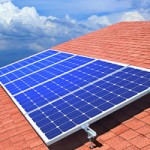
Tasol and Dako Power are among the suppliers interested in PRBOA’s power plan. Because there is already an established customer base, these suppliers are willing to provide rooftop photovoltaic panels and solar-powered geysers at a discount. While geysers are priced at R6000 a unit, complete panel systems might cost just over R100 000.
Plan To Be Successful
Although Parkhurst’s mission may seem too ambitious to residents of other suburbs, it is planning and organisation that makes this suburb’s plans successful. Beech provides insight on how residents were surveyed and approached with the idea of living off the grid.
Residents were also asked how much they were willing to pay to install such systems. It was only after making sure residents were well-informed and comfortable about how much they will spend that suppliers were contacted.
Residents of Parkhurst are fast becoming the beacon of light for the rest of South Africa. Through mutual consent and uniting to accomplish a common goal, the PRBOA is taking matters into its own hands. Hopefully, their dream of getting 2000 homes off the grid by 2020 will empower the rest of the country to do the same.
That’s what’s making Parkhurst homes attractive to potential Buyers – do you know what makes your home special?